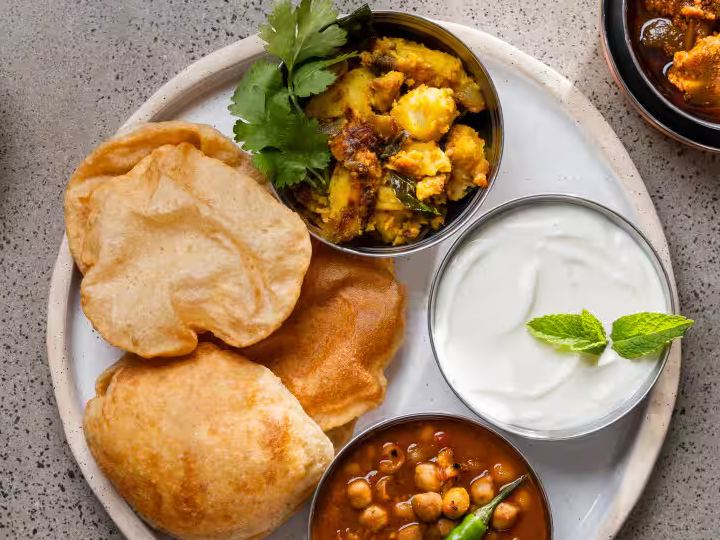
One plate, everything
Delhi ki Thali
In Delhi homes, lunch arrives on one big steel thali, with every dish in its own little katori and hot poori or roti stacked on the side. Nobody plates courses; you just eat, and someone keeps refilling. Ours is the plate you'd get at a Delhi Sunday lunch.
Old Delhi, after 1947
Chandni Chowk ke Chole
When Punjabi families crossed into Delhi after Partition, many started over by selling food in the lanes of Old Delhi. Spicy, dark chole with fluffy bread became the breakfast of Chandni Chowk, and the stalls that started then are still frying today. Ours is cooked in that style: dark, tangy, and heavy on whole spices.
The Sunday lunch
Delhi ke Kadhi Pakore
Kadhi was born from a thrifty kitchen: when the dahi turned too sour to eat, it went into a pot with besan and became something better. In Punjabi and Delhi homes, kadhi pakore with chawal is the slow Sunday lunch, the pot simmering for an hour while the house waits.
Temple feasts
Bhandare wale Aloo
A bhandara is a free community feast, served at temples and after poojas to anyone who sits down. The aloo is always the same: thin, tangy, no onion and no garlic, just hing and jeera. Served on a leaf plate with hot poori, it is the taste of standing in line with the whole neighbourhood.
Punjab winters
Saag Paneer
In Punjab, the first cold weeks mean fresh mustard greens, cooked down for hours and finished with white butter. Saag paneer is the everyday cousin of sarson da saag, with soft paneer stirred into the greens.
Daryaganj, 1950s
Paneer Butter Masala
The story goes that butter chicken was born in the 1950s at Moti Mahal in Daryaganj, a short walk from Chandni Chowk, when leftover tandoori pieces went into a buttery tomato gravy. Vegetarian Delhi soon swapped in paneer, and paneer butter masala became the star of every family celebration. In Delhi, you can't get married without paneer butter masala being served at your wedding.
Festival mornings
Poori
Poori meant a special morning: a holiday, a pooja, or guests at home. Ours are rolled by hand and fried fresh for your order.
Every single day
Tava Roti
The roti is the heartbeat of a North Indian kitchen. Rolled one at a time, cooked on the tava, and puffed on the flame, it went straight from Mummy's hand to your plate while you were still eating the last one.
Punjab and Haryana fields
Basmati Rice
Much of India's basmati grows in the fields of Punjab and Haryana. In North Indian homes, a pot of basmati means kadhi chawal, chole chawal or rajma chawal: the meal everyone asks for on a lazy Sunday.
The wedding table
Boondi Raita
Boondi, tiny pearls of fried besan, show up at every North Indian wedding and party, and there is always a big bowl of boondi raita to cool down the spicy plate. Ours is seasoned with roasted jeera and black salt.
After school
Masala Maggi
Maggi arrived in India in the early 1980s, and for a whole generation it became the after-school snack, the hostel dinner, and the first thing many of us learned to cook. We make it the way Mummy did, with onion, tomato and vegetables.
5 pm, every day, or with Maggi noodles
Ghar ki Chai
Chai is the clock of an Indian home. Milk, tea, ginger and a little elaichi, boiled twice in the same old pan, poured into steel cups for whoever is around. Ours tastes like that 5 pm cup.
Baked to order
Homemade Banana Bread Loaf
Many Indian homes bake without eggs, and so do we. Every loaf is baked only after you order it, never ahead of time, so it reaches you fresh out of the oven: soft, moist, and made with very ripe bananas.
Delhi winters
Gajar ka Halwa
In Delhi, winter officially begins when the red carrots arrive in the sabzi mandi. Whole afternoons go into grating them, and the kadhai sits on the stove for hours. The house smells of ghee and elaichi, and nobody leaves without a katori.
Punjabi winters
Atta Pinni Panjiri Laddu
Punjabi grandmothers make panjiri as soon as the cold sets in: atta roasted in ghee until the whole house smells of it, packed with gond and saunth for warmth and strength. It is the winter sweet, the sweet sent to new mothers, and the prasad at many poojas.